The price of a made-to-measure wedding dress depends mainly on three things: the fabric, the hours of work and the number of fittings. That is why a serious quote can only be made after choosing the design and fabrics together, not on the phone. The average figures you find online mix altered dresses, catalogue dresses and couture dresses: they are different kinds of work, and an average across them says little about what you will pay.
In the atelier we talk about price at the second meeting, when the sketches drawn for you and the fabrics are on the table. Here I try to explain what is inside that figure, so you arrive at that moment knowing what to ask.
What makes up the price of a couture dress?
| Item | What it includes | What makes it change |
|---|---|---|
| Fabric | The metres of fabric for the dress, the lining and any layers | The fibre, the weave or work (an embroidery, a brocade), the quantity the line needs |
| Pattern and toile | The pattern built on your measurements and the toile fitting on your body | How complex the line is: a drape takes more work than a straight cut |
| Fittings | The toile fitting and the fittings in the real fabric | How many corrections are needed between one fitting and the next |
| Handwork | Buttonholes, hems, buttons, finishings | The number of buttons, the parts embroidered or draped by hand |
| Delivery | The dress pressed, in its garment bag, with instructions for the day | Little: it is the same for everyone |
Why does the fabric weigh so much?
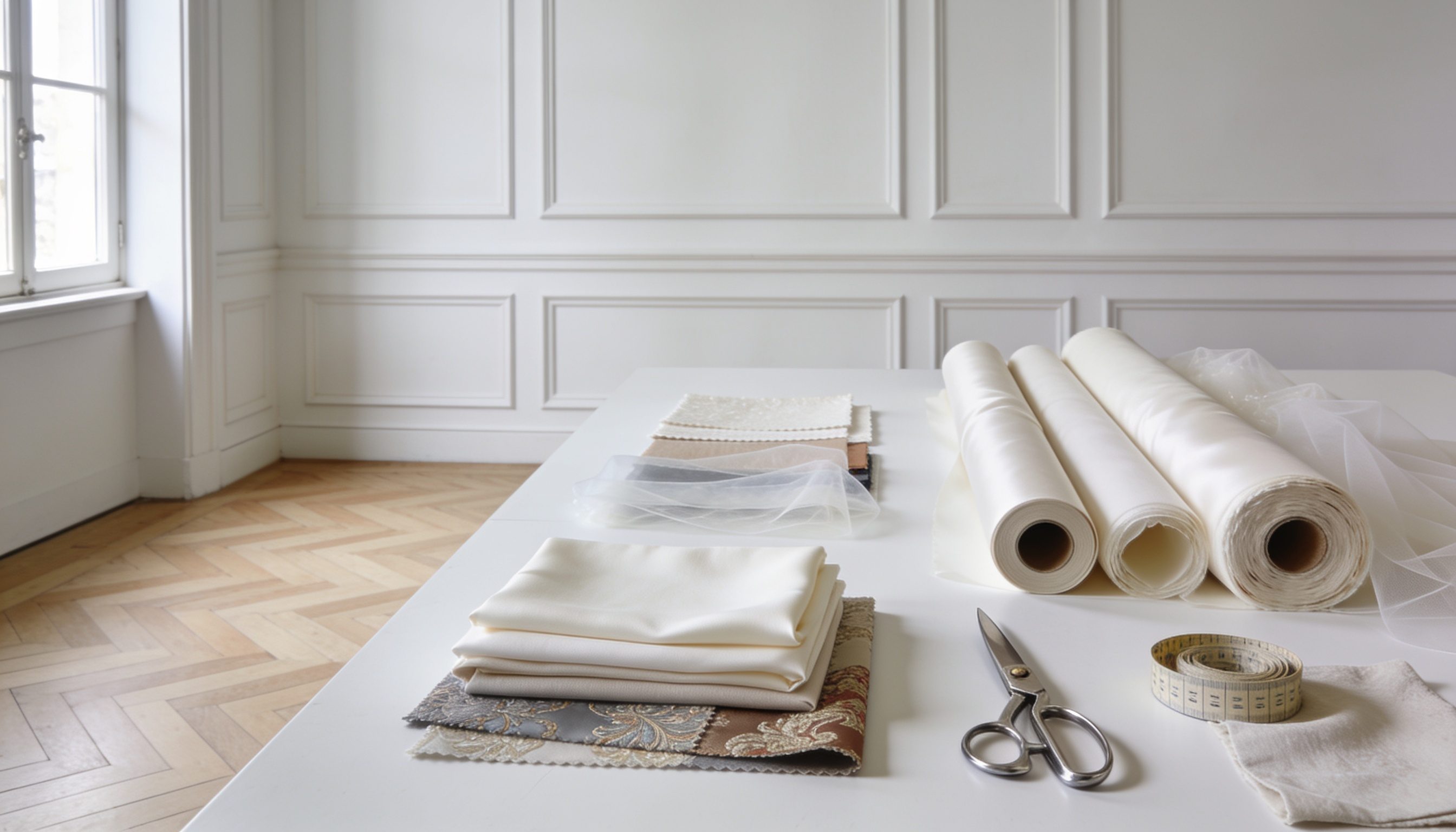
Because it is the part you see and feel on you, and because the quantity changes a lot from one design to another. A full tulle skirt takes many metres; a straight crêpe dress takes fewer, but heavy crêpe costs more per metre. The fibre matters too: one of our brides, Alessandra, wrote that she wanted a dress «made with fine fabrics and not with polyester or synthetics». It is a choice made at the second meeting, swatches in hand.
Each of our five collections starts from a specific fabric: satin and organza, crêpe, embroidered tulle, pleated silk, brocade. Knowing which one you start from already gives an idea of which item will weigh most.
How many hours are inside a dress?
Many, and most of them do not show. The pattern, the toile, the corrections after each fitting, then the last weeks of almost only handwork. There can be thirty buttons down the back of a dress, sewn on one at a time together with the little bow. The atelier's seamstresses sew each dress from start to finish: the price also includes the fact that your dress never leaves the atelier.
Which questions should I ask before signing a quote?
They apply with us and with any other atelier. The answers tell you what you are buying.
- Is there a toile fitting? If not, you are probably starting from an existing model.
- How many fittings are included? And what happens if one more is needed.
- Who sews the dress? In the atelier or elsewhere, one person or several.
- What happens if my body changes between fittings? Are the corrections included?
- How is it paid? In how many instalments and at which stages of the work.
- What is excluded? Veil, accessories, any alterations after delivery.
Does made to measure always cost more?
Than an altered dress, almost always, because there are many more hours of work. But the right comparison is with what you need. If you find a dress in a shop that fits with two adjustments, made to measure is not necessary. If you keep changing details on dresses that are never quite right, every adjustment has a cost, and the total sometimes brings you closer to made to measure than you would think.
The same goes for occasion wear: four of our last six brides also had their mother dressed here, and doing it in the same atelier means fabrics and colours are chosen together.
Frequently asked questions
When is the price of a made-to-measure dress discussed?
With us at the second meeting, when you have two or three sketches drawn for you and the fabrics in front of you. It cannot be done earlier: the price depends on exactly those choices.
Why are prices online so different?
Because the words «made to measure» cover different kinds of work: dresses altered from a size, catalogue models ordered with your measurements, couture dresses with a toile and fittings in the atelier. Averages mix them up.
Can the fabric be chosen to stay within budget?
Yes. For the same line, the fabric is the item that can be adjusted most. It is chosen at the second meeting, looking at the swatches.
Does the first meeting commit me to anything?
No. It lasts about an hour and is for getting to know each other and understanding what you are looking for.